Collection: What Are Reference Guides?

Reference Guides Help You Work Faster, Make Fewer Mistakes, Retain More
Table of Contents
- What Is a Reference Guide?
- How Is a Reference Guide Different from a Cheat Sheet, etc?
- A Brief History of Reference Guides and Other Reference Tools
- The Science That Proves They Work
- About ilubra guides
- The Bottom Line
- Further Reading
What Is a Reference Guide?
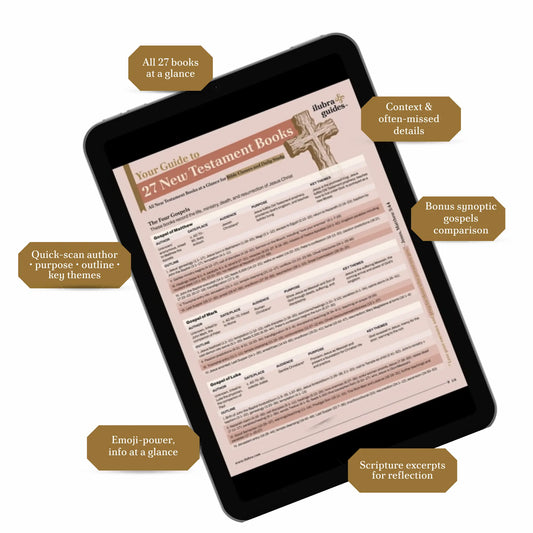
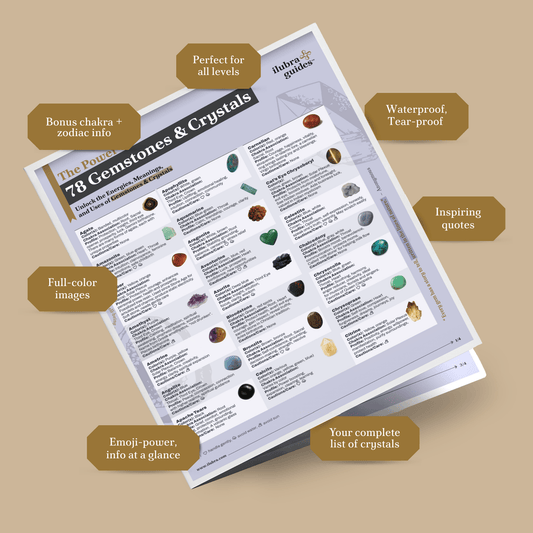
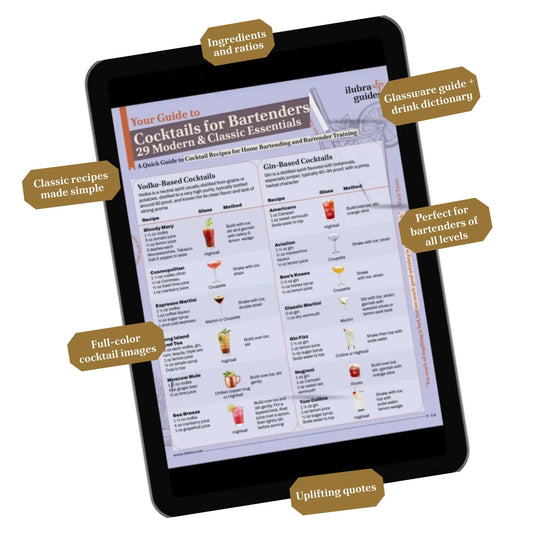
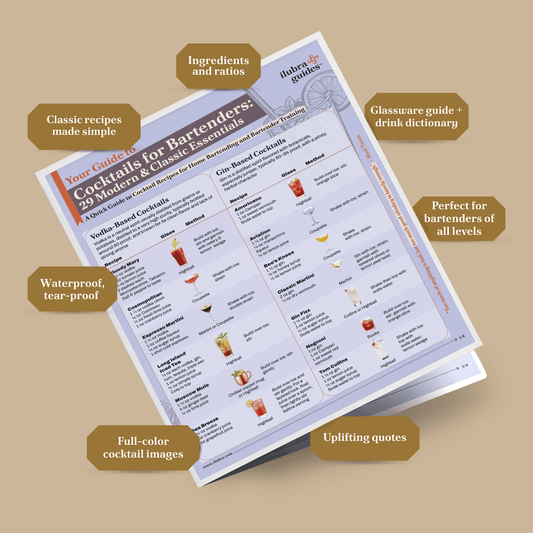
A reference guide is a concise, well-organized document that puts the most important information about a specific topic in one place, in a format designed for rapid look-up rather than sequential reading. Where a textbook or manual develops understanding progressively, a reference guide skips that. It assumes you already know the basics. It just gives you the answer you need, right when you need it.
Speed is the whole point. A reference guide is not trying to teach you everything. It's built to get you the right answer fast.
How Is a Reference Guide Different from a Cheat Sheet, etc?
A textbook explains. An encyclopedia covers everything. A manual walks through an entire system. A reference guide takes only the facts you need most often and puts them right within reach.
A reference guide is also different from a study guide. A study guide teaches you through explanations and examples. A reference guide does not teach. It assumes you already know your stuff. Its only job is to help you find the right answer fast.
Concise Format
A reference guide strips a topic down to what you actually use. No backstory. No examples meant to teach you what you already know. Just the facts you reach for when you need them.
Organized Structure
Everything is set up for fast finding. Sections have clear names you can scan at a glance. Tables and numbered lists replace long paragraphs wherever they work better.
Task-Oriented Content
A reference guide is not organized by topic. It's organized by task. Every heading and every section is there for one reason: to help you get the job done.
Standalone Utility
A good reference guide gives you everything you need without sending you elsewhere. Everything you need to take action is right there on the page.
Boosted Efficiency
Reference guides cut the time you spend hunting for answers. Instead of digging through a manual, searching online, or asking a coworker, you just look it up.
Increased Information Retention
Using a reference guide actually helps you remember things. Research shows that looking something up in a well-made guide reinforces what you already know over time.
A Brief History of Reference Guides and Other Reference Tools
People have always wanted to keep important knowledge close at hand. That's not a modern idea. It goes back thousands of years.
Antiquity: Practical Condensation Before Print
Ancient scribes in Egypt, Mesopotamia, and Greece recorded navigational tables, astronomical data, and calendrical information on compact clay tablets and papyrus rolls. These were purpose-built look-up tools, consulted at the moment of need by mariners, merchants, and temple administrators.
12th-14th Centuries: The Medieval Scholarly Compendium
Medieval scholars compiled florilegia, extracting key passages from authoritative texts and arranging them thematically. Around 1200, Peter of Poitiers created one of the earliest known tools for organizing complex information for rapid retrieval.
1573: The First Documented Ready Reckoner
Reginald Wolfe published one of the earliest documented "ready reckoners": a printed guide of pre-calculated values for rapid commercial lookup.
18th-19th Centuries: The Professional Reference Guide Matures
Reference publishing became a distinct trade, producing pocket-sized technical tables for engineers, pharmacopoeia cards for physicians, tide tables for mariners, and currency conversion sheets for merchants.
Early-Mid 20th Century: Military Job Aids
During and after World War II, the U.S. military systematized the production of job aids: pocket cards and wall charts that let personnel operate complex equipment without relying on memory alone.
1980s-1990s: Personal Computing and the Laminated Guide
The rise of personal computing created a large new market for reference guides. In the 1990s, laminated reference guide publishing emerged as a dedicated consumer category.
2000s-Present: Digital Formats and Growing Consumer Demand
Smartphones and the internet transformed both the production and distribution of reference guides. Consumer interest has grown steadily: Google Trends data shows interest in "reference guide" increased approximately 20 percent over the past decade.
The Science That Proves They Work
A 2021 study published in the Journal of Education and Learning found that 75% of participants reported that writing their own reference sheet helped them learn course material more effectively, and 79% described using the sheet during the exam as "helpful" or "very helpful."
Research by Song and Thuente (2015) found a direct correlation between the quality of a student's reference sheet and their overall course grade. A controlled study by Larwin and Gorman (2014) found that permitting students to use a reference sheet during an exam reduced the course failure rate from 11.8% to zero.
The Bottom Line
Using a reference guide does not mean you don't know your subject. It means you care about getting it right. The research is clear: well-designed reference guides reduce mistakes, build confidence, and improve performance.
Further Reading
- Yildirim, B. (2021). Cheat sheets in teacher education. Journal of Education and Learning, 10(2), 1-14.
- Song, Y., & Thuente, D. J. (2015). A quantitative case study in engineering of the efficacy of quality cheat-sheets.
- Larwin, K. H., & Gorman, J. (2014). The effect of cheat sheet on academic performance in undergraduate statistics.
- Google Trends (2025). Search interest data for 'reference guide,' January 2015-January 2025.
- English Short Title Catalogue. ESTC S112011. Reginald Wolfe, 1573.
-
Bible Study at a Glance: Old + New Testament Bundle (Digital Download)
Regular price $17.90Regular price -
Holistic Health Guide Bundle: Vitamins, Essential Oils, Gemstones & Crystals (Digital Download)
Regular price $20.85Regular price -
Holistic Health Guide Bundle: Vitamins, Essential Oils, Gemstones & Crystals (Print Edition)
Regular price $26.85Regular price -
Bartending Guides Bundle: Zero-Proof to Full-Proof Cocktail & Mocktail Recipes (Digital Download)
Regular price $13.90Regular price -
Cocktail+Mocktail Recipes Guide Bundle – 29 Cocktails, 26 Mocktails, Waterproof (Print Edition)
Regular price $17.90Regular price